Work Hours
Monday to Friday: 7AM - 10PM
Weekend: 10AM - 7PM
Original price was: $750.00.$489.00Current price is: $489.00.
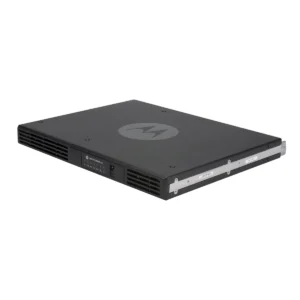
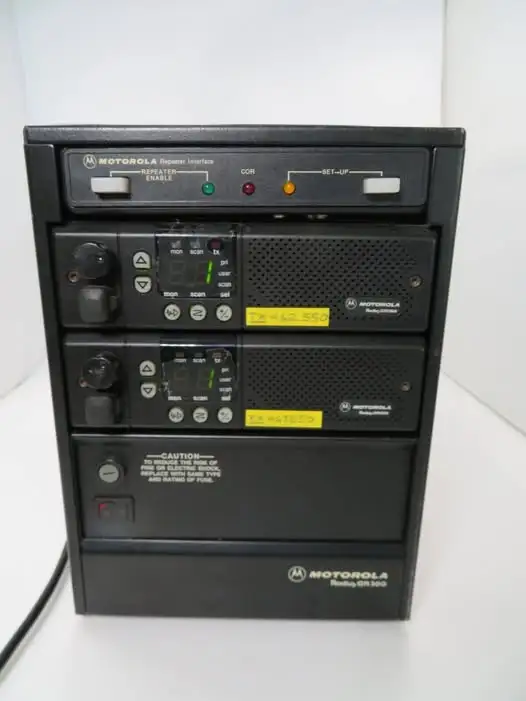
The Motorola Radius GR300 Repeater is a dependable legacy Motorola repeater solution for compatible professional two-way radio systems. Ideal for maintaining or replacing existing Radius VHF or UHF radio infrastructure, with configuration and frequency compatibility verified before ordering.
If you’re maintaining a legacy Motorola two-way radio system and need a dependable repeater platform, the Motorola Radius GR300 Repeater is a practical option to consider.
The Motorola Radius GR300 (GR-300) was designed as a compact repeater/base station solution for professional radio communication systems. It is particularly relevant for organizations that still operate compatible Motorola Radius equipment and need replacement or additional repeater hardware without completely rebuilding their existing radio infrastructure.
Unlike newer Motorola MOTOTRBO repeaters such as the SLR 1000 and SLR 5700, the GR300 belongs to Motorola’s older Radius generation. That distinction is important when selecting equipment for an existing radio system.
If you’re replacing a failed GR300, expanding an established Radius system, or maintaining a legacy radio network, matching the repeater’s frequency band, configuration and system requirements is essential.
The Motorola GR300 Repeater is valued primarily for its compatibility with older professional Motorola radio systems and its straightforward repeater architecture.
For organizations that already have compatible Radius radios in service, keeping the existing infrastructure can sometimes be more practical than replacing an entire radio fleet.
The GR300 can be considered for applications such as:
The most important consideration is compatibility with your existing radios and frequency configuration.
One of the biggest reasons customers look for a Motorola Radius GR300 today is to maintain an existing legacy radio system.
Older radio equipment can remain in service for many years when it continues to meet an organization’s communication needs. Replacing one component of a system can therefore be more practical than replacing every portable and mobile radio.
The GR300 can make sense when you already have compatible Radius radios and need a matching repeater solution.
Before ordering, verify:
The exact frequency configuration is one of the most important details when purchasing a used or replacement Motorola GR300 Repeater.
Depending on the particular unit, configuration and market, GR300 equipment may be encountered in different frequency ranges.
Do not assume that every GR300 is interchangeable.
If you’re replacing an existing repeater, compare the exact model and frequency information from your current installation before ordering.
For professional radio installations, the antenna, duplexer, coaxial cable and other RF components must also be compatible with the selected frequency.
A repeater can help extend the practical coverage of two-way radios by receiving a transmission from one radio and retransmitting it over the radio system.
This can be useful when portable radios cannot reliably communicate directly with one another because of:
A properly installed repeater can provide a central communications point for a group of compatible radios.
The GR300 was developed for this type of professional radio infrastructure and remains relevant to organizations maintaining compatible legacy Motorola systems.
A used Motorola Radius GR300 Repeater can be an economical option when maintaining an older radio network.
Used equipment can be particularly attractive when your organization already has a fleet of compatible radios and wants to avoid the expense of replacing equipment that is still meeting operational requirements.
However, buying a used repeater requires more attention to compatibility than simply choosing the same product name.
Before ordering a used GR300, confirm:
Make sure the repeater operates within the frequency range required by your system.
Check the repeater’s programming and configuration.
Ask about the physical and operational condition of the unit.
Determine whether the unit includes the required power supply, cables, mounting equipment or other accessories.
Confirm whether programming is available or whether the unit will need to be programmed by your radio technician.
Make sure the GR300 is compatible with your existing Motorola Radius radios.
It is important not to confuse the Motorola Radius GR300 with newer Motorola MOTOTRBO infrastructure.
The GR300 is a legacy Radius repeater, while products such as the Motorola SLR 1000 and Motorola SLR 5700 are designed for modern MOTOTRBO systems.
Best suited for:
Best suited for:
See our Motorola SLR 1000 Repeater page for a modern MOTOTRBO alternative.
Best suited for:
See our Motorola SLR 5700 Repeater page if you’re looking for a modern higher-power MOTOTRBO repeater.
This distinction is important for both customers and search engines: the GR300 page should target legacy Radius repeater intent rather than competing directly with your MOTOTRBO repeater pages.
The GR300 can be relevant to organizations that operate compatible legacy radio systems in environments such as:
Security personnel can use compatible radio systems to coordinate across buildings and properties.
A repeater can help improve communication between warehouse teams working across larger facilities.
Production, maintenance and supervisory personnel may benefit from centralized radio communication.
Radio infrastructure can support communication between field personnel and operational teams.
A repeater can help maintain communication across larger job sites when compatible radios are already in use.
Hotels, resorts and large properties may use two-way radios for maintenance, security and operations.
Because the GR300 is a legacy Motorola product, compatibility should be your first priority.
Identify the portable or mobile radios currently operating on your system.
Determine whether your system is VHF or UHF and verify the exact operating frequencies.
The replacement unit should match the requirements of your existing system.
The repeater may require programming to match your radio system.
A repeater cannot compensate for an unsuitable antenna, duplexer or feedline.
Make sure the frequencies used by your radio system are properly authorized in your jurisdiction.
For U.S. customers, the Federal Communications Commission (FCC) provides information about radio services and licensing.
FCC – Radio Services and Licensing
Because the GR300 was produced in multiple configurations and is now commonly encountered as legacy/used equipment, specifications can vary by the exact unit.
| Feature | Motorola Radius GR300 |
|---|---|
| Product type | Two-way radio repeater/base station |
| Product family | Motorola Radius |
| Model | GR300 / GR-300 |
| System type | Legacy Motorola radio infrastructure |
| Frequency | VHF or UHF depending on configuration |
| Application | Professional two-way radio systems |
| Condition | New/used configurations may vary |
| Programming | Configuration dependent |
| Installation | Fixed-site repeater/base station |
| Compatibility | Must be verified against existing radio system |
Important: Always verify the exact model number, frequency range, programming and hardware configuration of the individual unit before ordering.
Yes—provided it matches the radio system you’re maintaining.
The age of a radio repeater does not automatically make it unsuitable for every application. For an organization with a working legacy radio fleet, replacing a failed component with compatible equipment can be a practical way to keep the system operating.
However, organizations building a new radio network should generally evaluate current-generation infrastructure rather than assuming a legacy GR300 is the right starting point.
If you’re building a new digital MOTOTRBO system, consider our:
The Motorola Radius GR300 is a legacy Motorola repeater/base station designed for compatible professional two-way radio communication systems.
No. The GR300 belongs to the older Motorola Radius platform. It should not be presented as a modern MOTOTRBO repeater.
If you need a MOTOTRBO repeater, consider the Motorola SLR 1000 or Motorola SLR 5700.
GR300 units are primarily encountered through used and refurbished radio-equipment markets because it is a legacy product. Availability can vary significantly by frequency and configuration.
No. Compatibility depends on the radio model, frequency, programming and system configuration.
Always verify compatibility before ordering.
GR300 units can be found in different frequency configurations. The exact frequency range depends on the particular model and configuration.
Check the specific unit’s frequency information before purchasing.
Not as a direct modern-system replacement.
The GR300 is a legacy Radius repeater, while the SLR 5700 is a modern MOTOTRBO repeater. The appropriate replacement depends on your radio fleet and system architecture.
For a new installation, you should evaluate current-generation repeater platforms first. A GR300 is more appropriate when maintaining a compatible existing legacy radio system.
The Motorola Radius GR300 Repeater remains a useful option for organizations maintaining compatible legacy Motorola radio systems.
If you already operate a Radius-based network, the GR300 can provide a practical path for replacing or expanding existing repeater infrastructure without immediately replacing an entire radio fleet.
Before ordering, verify the frequency, configuration, programming requirements and compatibility of your existing system.
For customers moving toward modern digital communications, explore our Motorola MOTOTRBO repeaters and radios for newer infrastructure options.
For general Motorola product information and current professional-radio solutions:
Motorola Solutions – Two-Way Radios
For U.S. radio-frequency and licensing information:
Federal Communications Commission – Radio Services
For Motorola’s current MOTOTRBO infrastructure, see: