Work Hours
Monday to Friday: 7AM - 10PM
Weekend: 10AM - 7PM
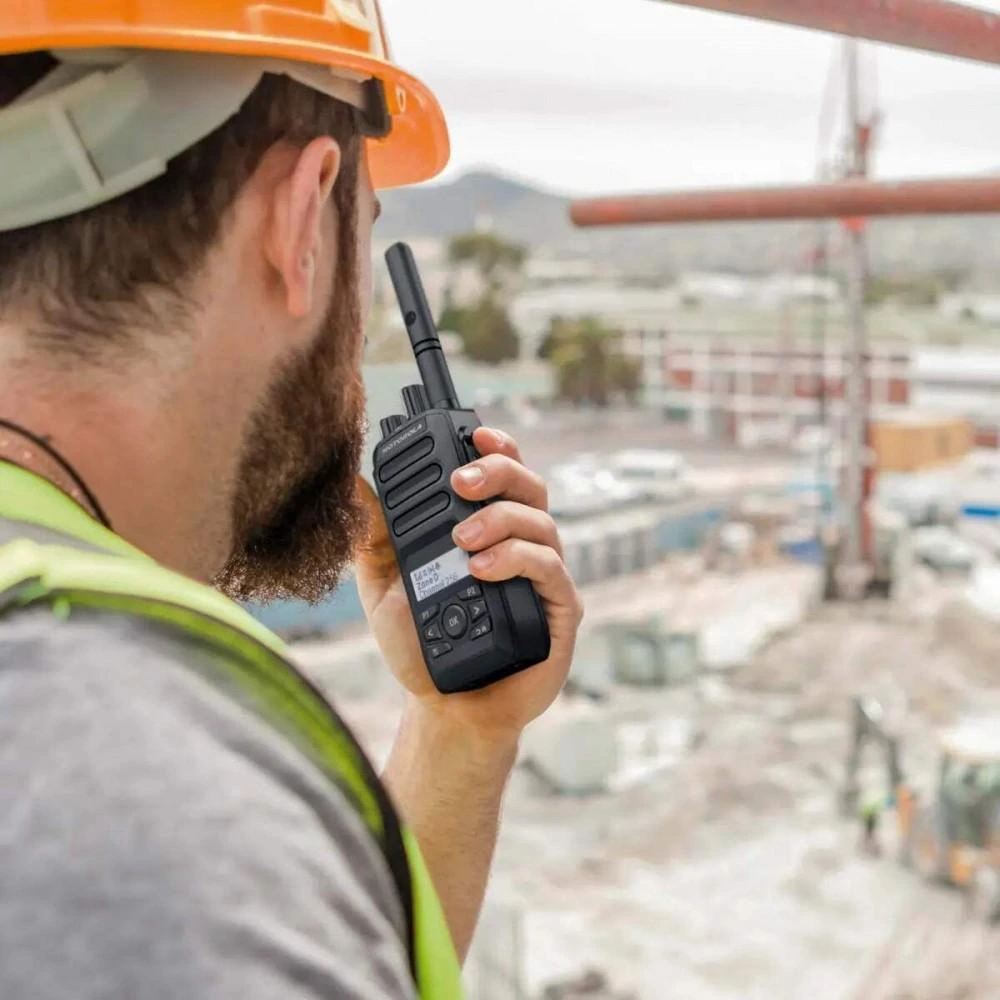
Construction sites are busy, noisy, and often spread across large areas. From coordinating equipment operators and ground crews to communicating with supervisors and safety personnel, reliable communication plays an important role in keeping construction projects moving.
While smartphones can be useful, two-way radios for construction work offer quick, direct communication without requiring workers to dial numbers or wait for calls to connect. They are practical for teams working in noisy environments, around heavy machinery, across large job sites, and in areas where mobile phone coverage may be unreliable.
Choosing the right construction two-way radio can improve coordination, save time, and help teams communicate more efficiently throughout the workday.
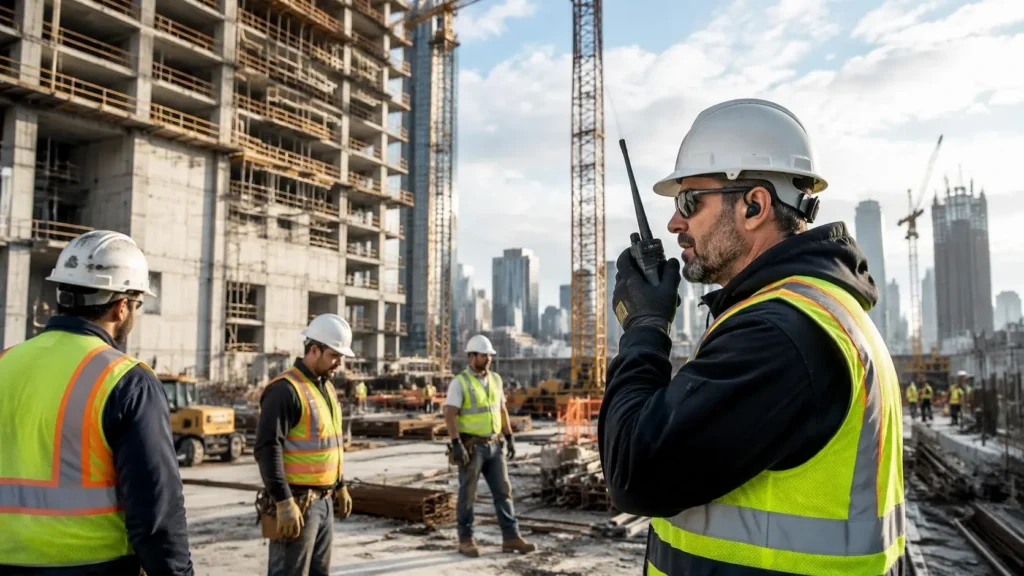
Construction work often involves several teams working simultaneously in different locations. A crane operator may need instructions from a ground worker, a supervisor may need to reach multiple crews, and security personnel may need to coordinate site access.
Two-way radios make these communications easier by allowing workers to speak directly or communicate with an entire group at the same time.
While smartphones can be useful, two-way radios for construction work offer quick, direct communication without requiring workers to dial numbers or wait for calls to connect. They are practical for teams working in noisy environments, around heavy machinery, across large job sites, and in areas where mobile phone coverage may be unreliable.
Choosing the right construction two-way radio can improve coordination, save time, and help teams communicate more efficiently throughout the workday.
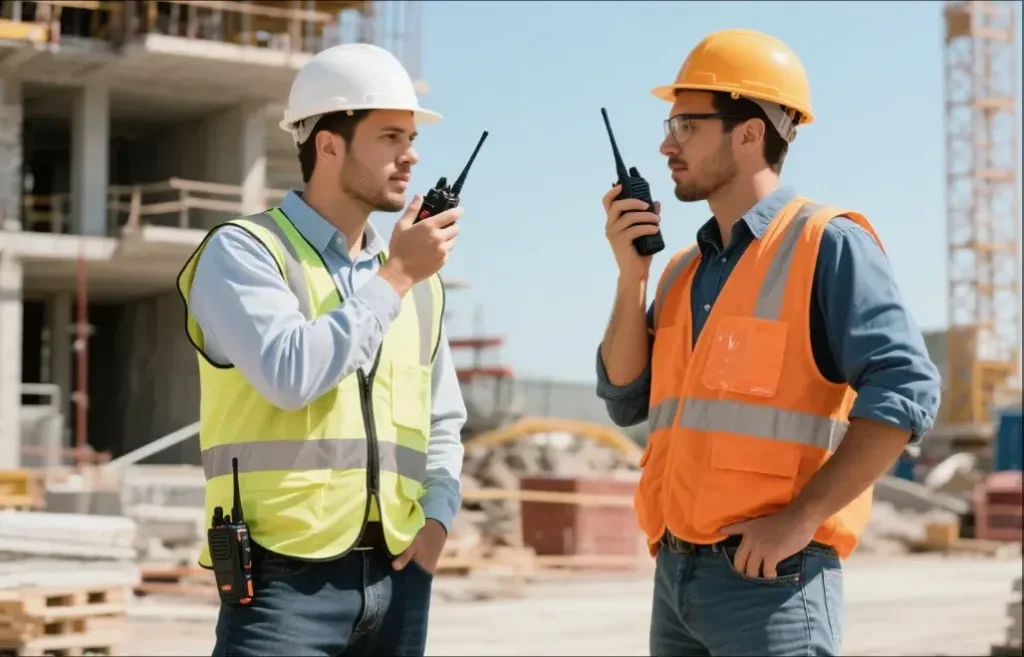
Some of the key benefits include:
Instant communication: Workers can communicate at the push of a button without making individual phone calls.
Improved coordination: Supervisors and crews can coordinate deliveries, equipment movements, and daily tasks.
Safety communication: Radios can help workers communicate hazards, emergency situations, and changing site conditions quickly.
Better productivity: Direct communication can reduce unnecessary movement and delays when teams need instructions.
Group communication: Teams can communicate on shared channels, depending on the radio and system configuration.
The best construction radio depends on the size of the site, the working environment, the number of workers, communication requirements, and budget. Some construction companies need simple analog radios, while others benefit from professional digital radios with more advanced feature
Motorola two-way radios are popular options for professional communication in construction, manufacturing, security, and industrial environments. Motorola offers a range of radios designed for different budgets and operational requirements.
Models such as the Motorola R2, R5, R7, XPR series, and some APX radios may be suitable depending on the site’s communication requirements and radio system.
The Motorola MOTOTRBO range is particularly worth considering for construction teams looking for digital communication, supported features, and options for managing communication across different teams.
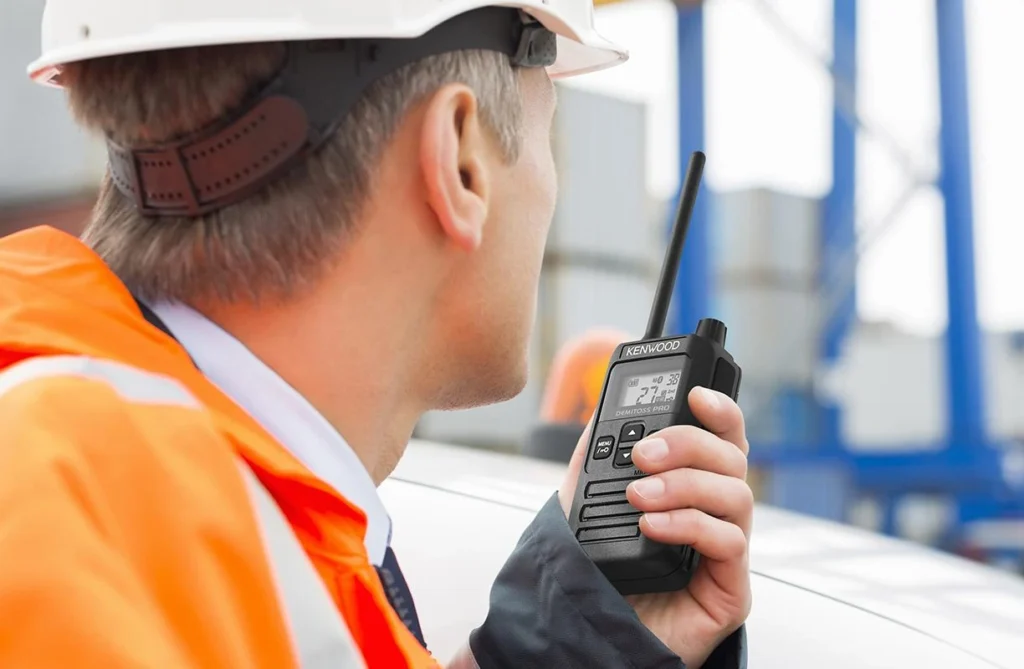
Kenwood two-way radios are another option for construction companies looking for dependable professional communication equipment. Kenwood offers analog and digital radio models with different capabilities, depending on the series.
Some Kenwood NX and TK series radios are used in professional environments where durability, clear audio, and practical communication features are important.
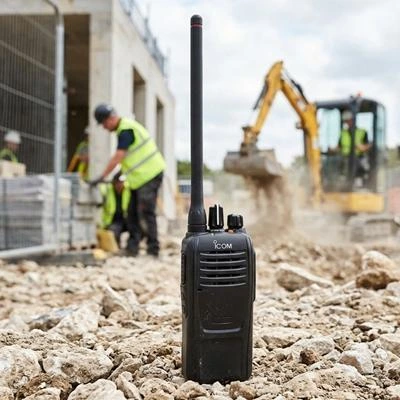
Icom offers professional two-way radios designed for commercial, industrial, and outdoor applications. Depending on the model, Icom radios may offer digital or analog operation, rugged construction, and useful features for teams working on construction projects.
They are worth comparing when looking for professional communication equipment for jobsite operations.
Not every two-way radio is designed for the same working environment. Before purchasing radios for your construction crew, consider the following features.
Construction sites can expose radios to dust, rain, vibration, accidental drops, and rough handling. Look for radios with appropriate IP ratings for dust and water resistance and MIL-STD specifications where applicable. Always verify the specific model’s ratings rather than assuming every radio in a product series offers the same protection.
Construction sites are often noisy due to generators, machinery, trucks, power tools, and other equipment. Radios with loud speakers, noise suppression, and compatible remote speaker microphones can help workers hear messages more clearly.
Long working hours require radios that can last through a shift. Consider battery capacity, charging options, spare batteries, and whether multi-unit charging stations are needed for your team
Radio range depends on several factors, including terrain, buildings, obstructions, antenna placement, radio power, and frequency band. A radio advertised with a particular range may not achieve that range on a real construction site.
For larger sites, multi-building projects, underground areas, or sites with significant obstructions, a properly designed repeater system may help improve coverage.
Construction workers often need to operate radios while wearing gloves or performing tasks. Simple controls, clearly labeled buttons, practical channel selection, and compatible accessories can make a difference during daily use.
Accessories can improve convenience and usability on a jobsite. Consider:
Remote speaker microphones
Replacement radio batteries
Multi-unit battery chargers
Belt clips and carrying accessories
Earpieces and headsets
Compatible antennas
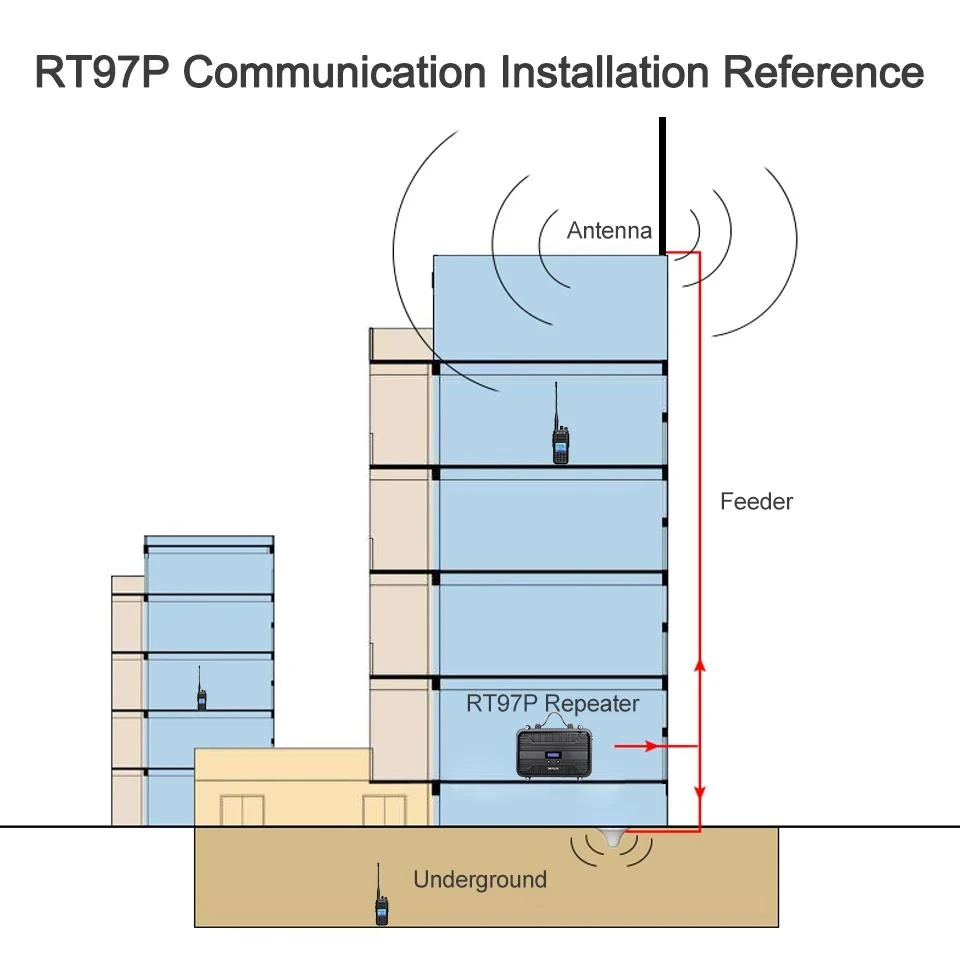
For smaller construction projects, handheld radios may provide sufficient communication coverage. However, larger construction sites may have communication challenges due to buildings, metal structures, terrain, underground parking, or other obstructions.
Portable two-way radios are convenient because workers can carry them throughout the site and communicate with other users on compatible channels.
Two-way radio repeaters can help extend communication coverage by receiving and retransmitting radio signals. They may be useful on large construction sites, multi-floor buildings, industrial facilities, and projects where direct radio communication is limited.
The appropriate repeater, antenna placement, radio frequency, and system design depend on the site and local licensing requirements.
When purchasing radios for construction work, you may come across analog and digital models.
|
Feature |
Analog radios |
Digital radios |
|---|---|---|
|
Communication |
Traditional radio communication |
Digital voice communication |
|
Audio |
Can be clear at strong signal levels |
Often maintains intelligibility better as signal conditions change, until coverage drops |
|
Features |
Basic communication features |
May offer group calling, signaling, messaging, and additional functions |
|
Compatibility |
Compatible with appropriate analog radios |
Requires compatible digital radios and system settings |
|
Budget |
Often a practical lower-cost option |
Can offer more features depending on configuration |
Digital radios, including DMR radios, can be attractive to construction companies looking for additional communication features and improved management of team communications. However, the right choice depends on the budget, existing equipment, and specific site requirements.
Before purchasing radios, consider these practical questions:
How large is the construction site? A small building project may require only handheld radios, while a large site may benefit from a repeater.
How many workers need radios? Consider supervisors, equipment operators, security, ground crews, and other personnel.
What working conditions will the radios face? Dust, water, noise, vibration, and rough handling should influence your selection.
Do you need analog or digital radios? Consider the features, compatibility, and future communication needs.
What accessories are necessary? Batteries, speaker microphones, chargers, and headsets can improve everyday usability.
Are licensing requirements applicable? Check local frequency and radio licensing regulations before operating your equipment.
Finding the right radio for your construction team starts with understanding your communication needs. Whether you need affordable handheld radios for a small crew, professional digital radios for a larger project, or repeaters to improve coverage, choosing suitable equipment can make daily operations easier.
At Radio-Depot, you can explore professional two-way radios, including Motorola, Kenwood, Icom, and other communication equipment for different working environments.
Explore our two-way radio shop to discover portable radios, mobile radios, repeaters, batteries, chargers, speaker microphones, and other radio accessories.
For additional information about radio technology and safety requirements, you can also consult:
Motorola Solutions – Professional radio equipment and communication solutions.
OSHA – Workplace safety information and construction safety resources.
FCC – Radio spectrum, licensing, and communication regulations in the United States.
Two-way radios remain an important communication tool for construction companies. They help workers coordinate tasks, communicate with supervisors, manage equipment operations, and share information across a jobsite.
The best two-way radio for construction work is one that matches the project’s size, working conditions, coverage requirements, and budget. By comparing radio features, battery life, audio quality, durability, and system compatibility, construction companies can make better equipment purchasing decisions.
Whether you’re working on a small construction project or a large commercial development, investing in the right communication equipment can help your team stay connected throughout the day.
Enter your email address below and subscribe to our newsletter